You Are Feeding Into Rape Culture
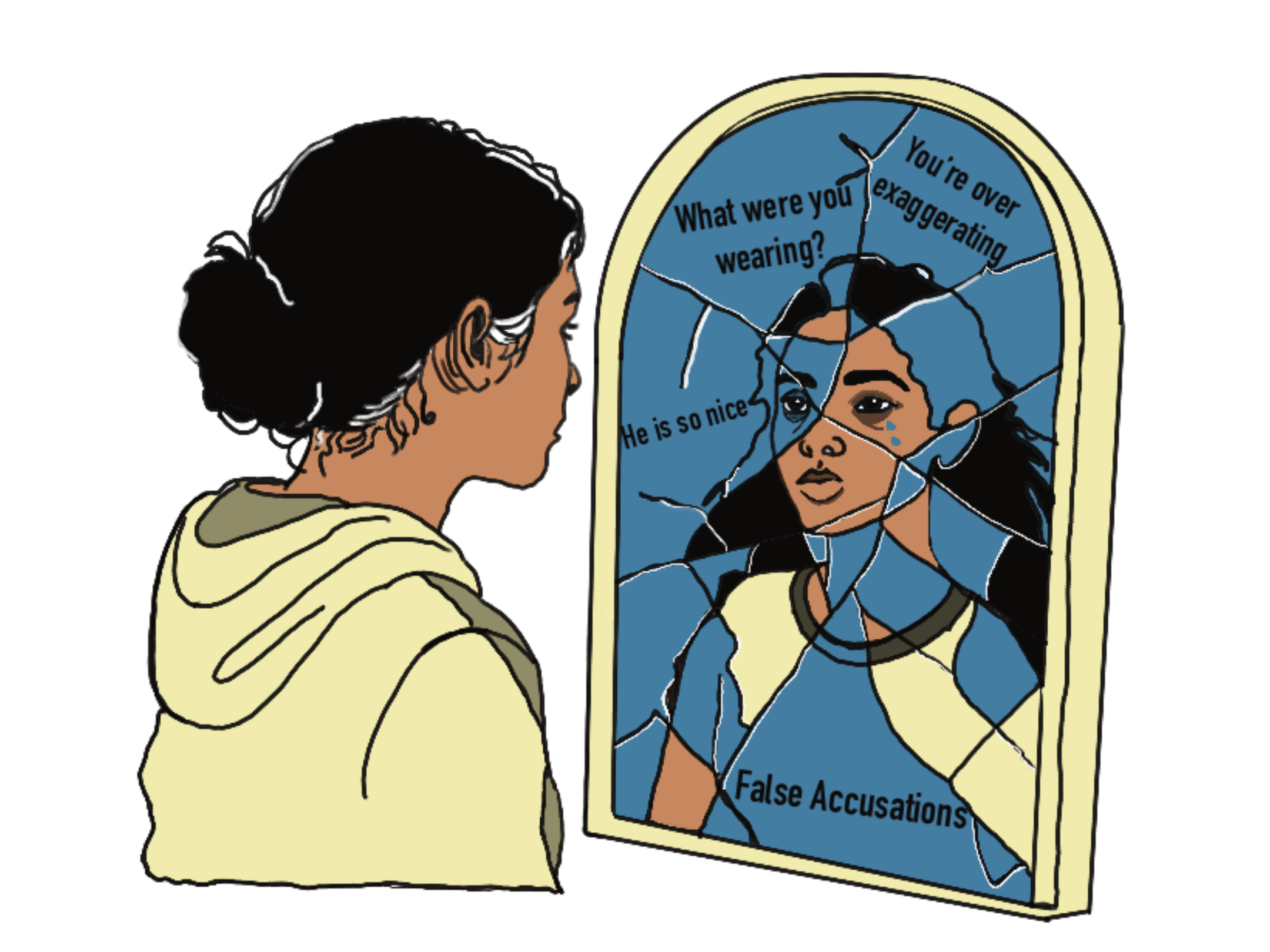
From a young age, most of us are taught to fear a specific kind of shadow: the “monster” lurking in a dark alley, a depraved stranger waiting to pounce. We build our lives and our institutions around the comforting belief that if we stay in sunny spaces like university campuses or with family and friends, then we are safe from these monsters. We assume these foundational spaces are neutral havens where safety, truth, and reason prevail. However, this focus on external monsters is a dangerous distraction from a much more uncomfortable reality.
In truth, sexual violence is not an isolated abnormality but a pervasive condition woven into our society. It is facilitated not by outliers alone, but by a collective framework of stories and systems that dictate who deserves protection and who can be violated without consequence.
Ultimately, rape culture functions as a multifaceted political weapon of meaning-making that distorts reality through contradictory myths, justificatory discourses, and institutional practices to normalize sexual violence while simultaneously reinforcing existing hierarchies of white supremacy, heteropatriarchy, and institutional privilege across the hegemonic, structural, disciplinary, and interpersonal domains of the Matrix of Domination.
Before delving into the thesis, rape culture must be defined, as the term provides the foundational framework for analyzing the systemic normalization of sexual violence. As stated by Alisa Kessel, a scholar in political theories, the phrase “rape culture” emerged from radical feminist scholarship in the mid-1970s, marking a shift in principles that moved beyond viewing sexual violence as an individual behavioral problem or a series of isolated deviancies (Kessel, 1).
It has since been redefined as a systemic exercise of domination within a broader structure of control. This transition identifies sexual violence through a “condition perspective” (Jahn, 19), which understands violence as a pervasive symptom of structural and symbolic systems rather than the work of “bad apples.”
According to Kessel, rape culture is defined as a set of intersubjective and collectively reproduced myths, discourses, and practices that individuals use to assign specific interpretations to reality (Kessel, 1. 18). These elements form an interpretive framework that functions as a political weapon of meaning-making, dictating who is recognized as a “credible” victim and who is excused as a “protected” perpetrator (Kessel, 1).
Renowned feminist philosopher Emily C.R. Tilton states that two sets of contradictory rape myths frequently distort this interpretive process. Catastrophizing myths define “real” rape solely as a monstrous act committed by a stranger in a dark alley, whereas minimizing myths characterize more prevalent forms of violence, such as acquaintance or date rape, as not “really” rape, often by utilizing victim-blaming narratives involving intoxication or clothing (Tilton, 5).
For example, Joanna Belknap, a sociologist, criminologist, and professor at the University of Colorado Boulder, described a story she heard from a rape crisis counselor who had spoken with a survivor whose assault was deemed “false” because she’d allowed her eventual rapist to remove her ski boots for her after skiing (Heaney, 6).
By skewing the collective understanding of what “real” rape looks like, these myths launch a dual attack on the trustworthiness of victims and the plausibility of their claims (Tilton, 15). Ultimately, an intersectional analysis reveals that rape culture is not maintained by patriarchy alone; it is inextricably woven into and sustained by white supremacy, heteronormativity, and capitalist exploitation.
As Patricia Hill Collins–an American academic and sociologist who specializes in race, class, and gender–identifies in her work on the Matrix of Domination, to discipline any group that threatens white heteropatriarchal control, ensuring that sexual violence remains an effective, though outwardly condemned, tool of systemic subordination (Luna et al., 5).
To analyze the mechanics of rape culture as a systemic condition rather than a series of isolated abnormalities, it is necessary to utilize a framework capable of capturing the complex interplay of power that sustains it.
The Matrix of Domination is a conceptual framework introduced by Collins to describe the multifaceted organization of power relations within society (Luna et al., 5). It is the framework best fit to capture how rape culture functions. Collins argues that power is not a singular, top-down force but is instead organized across various analytical levels to shape human action and maintain systemic inequalities.
By utilizing the Matrix as an examining tool, the analysis moves beyond “single-axis” thinking, which often examines patriarchy in isolation, to reveal instead how rape culture is maintained through interlocking hierarchies of white supremacy, heteropatriarchy, and capitalist exploitation.
As previously stated, these structures organize power across four interconnected domains: the hegemonic, structural, disciplinary, and interpersonal. The hegemonic domain exercises power through “ideology, culture, and consciousness” (Luna et al., 5), while the structural domain encompasses the large-scale social institutions that perpetuate systems of oppression. Simultaneously, the disciplinary domain addresses the specific organizational practices used to exert control over marginalized populations, while the interpersonal domain examines how disempowerment occurs through daily interactions (Luna et al., 5).
Together, these domains function as a cohesive structure of meaning that disciplines any group threatening white heteropatriarchal control, ensuring that sexual violence remains a persistent and effective weapon of systemic subordination.
The first domain to analyze is the hegemonic domain, which serves as the ideological instrument of rape culture, exercising power by shaping culture, consciousness, and the very interpretive frameworks through which society assigns meaning to sexual violence.
As Collins notes, this domain operates by convincing subordinates that their status is natural or inevitable, utilizing “ideology, culture, and consciousness” (Luna et al., 5) to maintain power imbalances. In the context of rape culture, Kessel defines this process as a collective “meaning-making” endeavor where intersubjective myths, discourses, and practices dictate who is recognized as a credible victim and who remains a protected perpetrator (Kessel, 7).
This domain functions through a trap of contradictory myths that effectively exclude the possibility of justice for the vast majority of victims. According to Emily Tilton, contemporary rape culture is characterized by the interplay between catastrophizing myths and minimizing myths (Tilton, 5).
Catastrophizing myths define “real” rape exclusively as a monstrous, life-shattering act committed by a depraved stranger in a dark alley (Tilton, 16). This creates a dangerous “Modus Tollens” inference in the public consciousness; if “real” rape is a monstrous act committed by a “monster,” then “good guys,” such as family friends, celebrated musicians, or neighbors, are incapable of rape (Tilton, 15). Conversely, minimizing myths characterizes the most common forms of sexual violence, such as rape by someone you know or date rape, as “not real rape.”
By leveraging victim-blaming narratives involving intoxication or clothing, these myths suggest that such encounters are simply “messy” or “misunderstandings,” which actively shields perpetrators who fit into the protected category of respectable men.
Furthermore, the hegemonic domain establishes a racialized landscape of credibility that reinforces white supremacy alongside patriarchy. Central to this is the myth of the Black male rapist, a narrative historically constructed during the Reconstruction era to justify white terror and lynchings (Tilton, 4). This myth functions to frame Black men as “plausible monsters” while positioning white femininity as property to be protected by white male authority (Kessel, 3).
Simultaneously, this domain also includes misogynoir, the intersection of racism and sexism to mythologize Black women as hypersexual (Purifoy, 15). By characterizing Black women as “unvictimizable,” the hegemonic domain effectively denies them credibility within the legal and social systems, ensuring that violence against them continues without significant objection from the state or the press (Kessel, 4).
The normalization of this violence is often reinforced through sacred normalization, where foundational texts and cultural narratives celebrate violent male figures. Biblical scholars Johanna Stiebert and Barbara Thiede note that biblical narratives often present male characters such as King David as objects of “gender-based hero worship” (Stiebert & Thiede, 8).
David is admired for his “warrior prowess” (Stiebert & Thiede, 1), a masculine ideal that allows biblical writers and historical commentators to omit or ignore the sexual violence he perpetrated. This legacy of admiration ensures that even the most ancient “warrior” archetypes provide a blueprint for modern “good guy” perpetrators, allowing their violence to be absorbed into a narrative of masculine excellence.
Together, these hegemonic stories, from the “monster in the alley” to the “hero king,” cage our collective understanding, making it historically plausible to protect power while silencing the violated.
While the hegemonic domain shapes the stories we tell, the structural domain organizes power through large-scale social institutions, such as universities, colleges, legal systems, the economy, and government agencies, to perpetuate systems of oppression and manage the “meaning” of sexual violence on a systemic scale.
As Collins notes, this domain ensures that institutional arrangements remain organized to maintain power inequalities. (Luna et al., 5) By examining rape culture through the structural domain, we can see how institutions prioritize their own preservation and economic interests over the actual safety and justice of the violated.
One of the most prominent examples of structural failure is the “carceral trap” established by the Violence Against Women Act (VAWA). As scholar Ember Jahn, a J.D. candidate, identifies, VAWA directs roughly 80% of its funding into the criminal legal system, which treats sexual violence as discrete acts committed by a few bad people rather than a symptom of a pervasive system (Jahn, 5).
This structural focus relies on what Jahn calls “magical thinking” (Jahn, 33): the belief that state-sanctioned punishment symbolically restores “honor” to the victim, while simultaneously ignoring the structural violence, such as poverty and economic inequality, that enables interpersonal harm in the first place. This carceral approach reinforces the perpetrator perspective, making the structural roots of violence invisible.
Furthermore, the structural domain exercises power through the geography of dominance, where physical spaces are racialized to facilitate control. Dr. Danielle Purifoy, J.D., Ph.D, and author, highlights a historical inversion of the forest. Forests once served as sites of Black spiritual refuge for those escaping plantation patrols, but were structurally re-enclosed as sites of white “frontierist” terror under the U.S. Forest Service (Purifoy, 9). To be “frontierist” in this context means to be something that must be conquered or discovered by the white national imaginary.
This logic is rooted in the 1463 Doctrine of Discovery, which established a prerequisite where only Christian Europeans were capable of “discovering” land (The Bull Romanus Pontifex, 2). Under this doctrine, indigenous peoples were not recognized as human beings with rights but as part of the wilderness to be subdued. This structural framework allowed the state to transform the forest from a “savage wasteland” into a site for rehearsing conquest, civility, and national order (Purifoy, 13).
A case study that Purifoy presents of this structural violence is the experience of Melody Starya Mobley, who in 1977 became the first Black woman to serve in the U.S. Forest Service. While her mother had instilled in her a childhood love of nature as a “refuge” where she felt “free” and exempt from prejudice, her professional reality in the state-managed forests was characterized by “terror, shame, and despair” (Purifoy, 11).
The most horrifying expression of this structural violence occurred in the summer of 1978 at a Forest Service bunker in Skykomish, Washington, where a white male colleague raped Mobley while a white female officer was present.
Within the framework of the structural domain, this act was not merely an interpersonal crime, but rather an exercise of white dominion over physical space, representing a “diminishment of refuge” for Black women as the structural re-enclosure of these lands transformed them back into sites of white terror (Purifoy, 11).
Mobley’s experience further highlights the mechanism of institutional betrayal within the structural domain, where a large-scale organization prioritizes its own reputation over the safety of its members.
Mobley endured nearly four decades of isolation and physical abuse within the agency before being forced to retire in 2005 (Purifoy, 11). The institution facilitated her exit after she filed a legal complaint and became vocal about the harassment she faced, demonstrating how the structural domain controls those who threaten its established hierarchies.
Thankfully, Mobley’s narrative concludes with a move toward reclaiming the forest; in the documentary “Dark White Forest,” she is shown leading Black youth through the woods to dismantle the geography of dominance by reestablishing the forest as a site of solidarity and ancestral knowledge rather than a site for white supremacist conquest (Purifoy, 11).
Finally, the structural domain reveals the commodified perpetrator, where institutions protect perpetrators viewed as valuable economic investments. This is most visible in collegiate athletics, such as the case of Jameis Winston at Florida State University (Kessel, 9). Winston’s abilities were worth tens of millions of dollars to the institution, leading the university and local police to suspend investigations into his alleged sexual violence to protect their investment (Kessel, 9).
By failing to collect evidence, the structure kept the “Black rapist” myth intact while vilifying his accuser, ensuring that structural institutions utilize the involvement of race and capitalist exploitation to secure white heteropatriarchal power at the expense of both the accused and the violated.
Beyond the broad institutional arrangements of the structural domain, the disciplinary domain addresses the specific organizational practices and management strategies used to exert control over marginalized populations and regulate the meaning of violence. While the structural domain organizes power, the disciplinary domain manages it through “organizational practices” that discipline human action, maintaining systemic asymmetries (Luna et al., 5).
In the context of rape culture, this domain functions by utilizing administrative procedures, media framing, and linguistic choices to manage the “problem” of sexual violence in ways that often prioritize institutional preservation over survivor justice.
A primary mechanism within this domain is privilege diffusion, a rhetorical strategy identified by Ph.D. candidate and scholar Jillian Sunderland in her study of elite boy violence at St. Michael’s College School. Sunderland argues that when sexual violence occurs within elite spaces, institutions and the media often deploy structural language, such as “toxic masculinity” or “systemic issues,” not to deepen accountability, but to disperse it so broadly that no individual or specific leader is held responsible (Sunderland, 2).
In the case of the gang sexual assaults at St. Michael’s, coverage shifted from the individual perpetrators to a vague “cultural failure” of the school (Sunderland, 7). By recasting elite boys as mere “products of a broken environment,” the disciplinary domain absorbs the language of structural critique to effectively shield power and obscure agency at every level (Sunderland, 1).
This domain further manages the meaning of violence through linguistic euphemisms that serve as shields, thereby abstracting criminal acts from their agents. At St. Michael’s, the disciplinary response included commissioning an independent report that reframed the sexual assaults as a systemic “bullying” or “hazing” problem (Sunderland, 8).
This reframing is a tactic of the disciplinary domain that “softens” criminality; as Sunderland notes, if an event is remembered primarily as a story about “boyhood bullying,” the reality of sexual assault and gendered violence is effectively erased from the institutional record (Sunderland, 9).
Similar linguistic management occurs in academic and legal spheres through the trivialization of trauma. Stiebert and Thiede critique the use of terms like “fuzzy,” “messy,” and “icky” to describe sexual violence, noting that such language often echoes the tactics used by legal systems to cast doubt on victims’ memories and descriptions of their experiences (Stiebert & Thiede, 5).
While these terms are sometimes intended to capture the complexity of “ordinary life,” they often serve as a disciplinary tool that mocks the horror of the violation and makes it harder for survivors to share their experience (Stiebert & Thiede, 9).
Finally, the disciplinary domain operates through institutional betrayal. Dr. Jennifer Gómez, a Black feminist and critical race scholar, defines it as a set of problematic “omissions” (failure to respond) or “commissions” (active cover-ups) by organizations that survivors depend upon for safety (Gómez, 2). Gómez’s research on ethnic minority college students reveals that over 90% of survivors reported institutional betrayal, characterized by the university “not doing enough to prevent” violence or creating an environment where such experiences seemed “common or normal” (Gómez, 5).
This failure to act is a disciplinary practice that signals to the violated that they are “unvalued members” of the institution. By managing reports of violence through administrative silence or reputation management, the disciplinary domain ensures that the Matrix of Domination remains intact, protecting the institution’s capital and status at the direct expense of the safety and credibility of its most marginalized members.
Finally, the interpersonal domain examines the micro-level of social organization, focusing on how power imbalances and disempowerment occur through routine, daily interactions and individual consciousness (Luna et al., 5). This domain is where systemic oppression is lived and experienced through personal relationships and private lives.
In the context of rape culture, power is maintained at this level through the reinforcement of aggressive masculinity within male peer groups, the use of dehumanizing cultural artifacts, and the subsequent “double betrayal” survivors face when they seek support from their immediate social circles.
A central mechanism of the interpersonal domain is the role of male peer support in facilitating what scholars Dr. Martin D. Schwartz and Walter S. DeKeseredy identify as “doing masculinity” (DeKeseredy & Schwartz, 25). Within homosocial environments such as fraternities and sports teams, power is routinely negotiated through “vocabularies of adjustment” (DeKeseredy & Schwartz, 36).
These are shared linguistic frameworks that allow men to define victims as “legitimate objects” for abuse, using terms such as “tease,” “loose,” or “gold digger,” while simultaneously maintaining an image of themselves as “normal, respectable men” (DeKeseredy & Schwartz, 66). Daily interactions are often centered on the “hypererotic” goal of “scoring” or “working a yes out” of women, a process where alcohol is frequently used as a tool to bypass consent (DeKeseredy & Schwartz, 53).
These routine interactions are further reinforced by cultural artifacts that desensitize individuals to sexual violence through the lens of humor. Objects common in male-dominated spaces, such as AI deepfakes or the “boob mug,” serve to reduce women to depersonalized, commodified body parts. When shared in a group setting, such artifacts reinforce a collective identity based on the objectification of women, creating a social environment where “nonserious” sexist jokes have serious consequences by lowering the threshold for interpersonal harm (DeKeseredy & Schwartz, 95).
The interpersonal domain is also a site of significant theoretical conflict regarding the “vulnerable” male narrative. Scholars Kenneth Corvo and Paul Golding argue that male violence should be understood through a biopsychosocial perspective, suggesting that many perpetrators possess “developmental vulnerabilities” rooted in early life maltreatment and attachment injuries (Corvo & Golding, 11).
However, an existential radical feminist rebuttal, offered by Dr. Anna Wimbledon, argues that portraying rapists as “vulnerable” is a form of “bad faith” that helps them evade responsibility. From this perspective, the claims of vulnerability made by men who rape are actually “rationalizations” used to justify their conscious choice to enact dominance and sexual objectification within the intersubjective moment (Wimbledon, 14).
Ultimately, the power of the interpersonal domain is most visible in the double betrayals experienced by survivors. This includes the “Second Rape,” a term used by researchers to describe the traumatizing experience of being disbelieved, blamed, or ridiculed by friends and family after reporting an assault (DeKeseredy & Schwartz, 197).
Presented in DeKeseredy and Dr. Schwartz’s work is the case of “Catherine,” a student activist who a close friend raped. This case illustrates this interpersonal failure; her roommates and boyfriend responded with hostility or a lack of support, making her feel “stigmatized” and “abandoned” by the very people she trusted (DeKeseredy & Schwartz, 194-218).
For ethnic minority survivors, this harm is often compounded by Cultural Betrayal Trauma. As Dr. Gómez identifies, when the perpetrator is someone of the same race, the survivor faces a unique “double bind,” forced to choose between seeking justice and maintaining community solidarity against broader racial oppression. This dynamic ensures the Matrix of Domination remains unchallenged at the most intimate levels of life (Gómez, 2).
While the domains analyze how power is organized and managed to normalize violence against women, addressing the invisibility of the male survivor is a necessary addition to this thesis, as it reveals how the Matrix of Domination utilizes gendered scripts to silence any victim who does not fit the “protected” archetypes of rape culture.
Male victimization is often rendered culturally and legally invisible because sexual violence is fundamentally scripted as a tool for “doing masculinity” and asserting dominance over a feminized “other” (DeKeseredy & Schwartz, 25).
A primary mechanism behind this invisibility is the feminization of the victim. Cultural attitudes toward rape imply that to be violated is to be “treated as a female,” a symbolic construction that leads male survivors to feel emasculated, castrated, and deprived of their masculinity (Jahn, 37).
This perception is rooted in patriarchal logic where “manhood” is defined by invulnerability and the capacity to enact, rather than suffer, violence. Consequently, when a man is raped, he often experiences a “psychic self-mutilation,” killing off emotional parts of himself to align with patriarchal demands that he remain “hard” even in the wake of trauma (Jahn, 45).
This invisibility is most starkly evident in the systemic violence within prisons, a site often overlooked by mainstream feminist and judicial discourses. Research cited in the sources highlights that sexual violence is endemic to the carceral institution, with one investigator estimating that as many as 18 adult males are raped every minute of every day, which equates to approximately nine million rapes per year within the U.S. prison system (Jahn, 44).
Legal authorities are often aware of this near-universality of rape but allow it to persist as an unofficial, though standard, part of state-sanctioned punishment. This systemic failure reinforces the hegemonic belief that certain bodies, specifically those that have been criminalized, are “unvictimizable” and unworthy of protection.
Furthermore, significant barriers to reporting are maintained by the “biopsychosocial continuum” that labels men exclusively as perpetrators. Corvo and Golding argue that when society operates solely through the lens of “toxic masculinity,” it fails to see “vulnerable boys” or recognize the developmental maltreatment that many men have endured (Corvo & Golding, 10).
This binary perspective “disallows” male victims from being recognized in policy framing, as adult male violence is rarely understood as being continuous with their own earlier victimization (Corvo & Golding, 10).
This lack of solidarity from a society that stigmatizes male survivors ensures that they remain “hidden victims,” trapped by patriarchal concepts of “honor” that equate reporting a violation with a “loss of face” so catastrophic that silence becomes the only perceived means of survival (Jahn, 37).
Ultimately, by making the male survivor invisible, the Matrix of Domination ensures that the “meaning” of rape remains tethered to a rigid gender hierarchy that protects power and obscures the full scale of systemic violation.
The invisibility of the male survivor, much like the commodification of the Black athlete or the systemic silencing of Black women, illustrates that rape culture is not a uniform struggle against patriarchy alone, but is instead a calculated Matrix of Domination designed to protect institutional privilege and maintain white heteropatriarchy.
This analysis reveals that sexual violence is not an isolated abnormality but a pervasive condition, a cohesive architecture of meaning that organizes power across the hegemonic, structural, disciplinary, and interpersonal domains to discipline any body that threatens the established order. By assigning specific interpretations to reality, rape culture functions as a political weapon of meaning-making that forecloses the possibility of justice for the vast majority of the violated while shielding those it deems “protected.”
To dismantle this architecture, we must move beyond the “magical thinking” that defines our current response to sexual violence (Jahn, 33). We must also reject the “deficit-oriented” approach of target hardening. While locks, blue lights, and safety apps may offer a symbolic sense of security, they do nothing to address the perpetrator’s motivations and instead place the burden of safety squarely on the shoulders of the vulnerable (DeKeseredy & Schwartz, 162).
True justice requires a radical shift toward Institutional Courage, which Dr. Gómez defines as a proactive commitment where organizations, especially universities and government agencies, prioritize transparency and the material needs of survivors over their own administrative reputations (Gómez, 7).
This must be accompanied by the adoption of the “material resource test,” a revolutionary framework proposed by Donna Coker that prioritizes laws and policies providing survivors with direct aid (Jahn, 43). By focusing on increasing access to housing, healthcare, and financial stability, we recognize that inadequate material resources often render a survivor’s choices coerced, thereby perpetuating the cycle of violation.
In conclusion, we must commit ourselves to the revolutionary task of uprooting the stories that cage us. We can no longer afford to operate from a perpetrator perspective that views violence as an individual deviation; we must instead adopt a condition perspective that understands sexual violence as a symptom of a broader, violent social structure.
As bell hooks reminds us, this work is an act of revolutionary love–an active choice involving responsibility, respect, and a refusal to allow hierarchical structures to be the basis of human interaction (Jahn, 45). Only by uprooting the four domains that protect power can we hope to build a future defined by collective care, solidarity, and the genuine possibility of survival and wholeness for all.
Works Cited
Corvo, Kenneth, and Golding, Paul. “Toxic Masculinity and Patriarchy: Barriers to Connecting Biopsychosocial Risk for Male Violence to Policy and Practice.” Partner Abuse, vol. 13, no. 4, 2022, pp. 420-34.
Gómez, Jennifer M. “Gender, Campus Sexual Violence, Cultural Betrayal, Institutional Betrayal, and Institutional Support in U.S. Ethnic Minority College Students: A Descriptive Study.” Violence Against Women, vol. 28, no. 1, Jan. 2022, pp. 93-106.
Heaney, Katie. “False Rape Accusations Are Incredibly Rare.” The Cut, 5 Oct. 2018, www.thecut.com/article/false-rape-accusations.html.
Jahn, Ember. “White Supremacy and the Legitimation of Violence Against Women: Analyzing the History and Impact of VAWA.” Cleveland State Law Review Et Cetera, vol. 74, 19 Nov. 2025, pp. 23-68.
Kessel, Alisa. “Rethinking Rape Culture: Revelations of Intersectional Analysis.” American Political Science Review, vol. 116, no. 1, 2022, pp. 131-43.
Luna, Zakiya, et al. “On Joy and War: Black Feminism/Intersectionality.” Annual Review of Sociology, vol. 50, 2024, pp. 61-83.
Purifoy, Danielle. “Scenes from the Insurgent [Black] Forest.” Cultural Dynamics, vol. 37, no. 3, 2025, pp. 170-86.
Schwartz, Martin D., and Walter S. DeKeseredy. Sexual Assault on the College Campus: The Role of Male Peer Support. SAGE Publications, 1997.
Sunderland, Jillian. “From ‘Bad Apples’ to ‘Toxic Masculinity’: Framing Blame in Media Narratives of Elite Boy Violence.” Sociology Compass, vol. 19, no. 8, Aug. 2025, article e70101.
The Bull Romanus Pontifex (Nicholas V), January 8, 1455. https://caid.ca/Bull_Romanus_ Pontifex_1455.pdf.
Thiede, Barbara, and Johanna Stiebert. “Feminism, Bible, Texts and Terror – A Feminist Reflection.” Feminist Encounters: A Journal of Critical Studies in Culture and Politics, vol. 9, no. 1, 1 Mar. 2025, article 08.
Tilton, Emily C. R. “Rape Myths, Catastrophe, and Credibility.” Episteme, vol. 21, 2024, pp. 408-24.
Wimbledon, Anna. “An Existential Radical Feminist Account of Rape: Dominance and Objectification.” Journal of Theoretical & Philosophical Criminology, vol. 17, Jan./Feb. 2025, pp. 18-34.