Chain Reaction
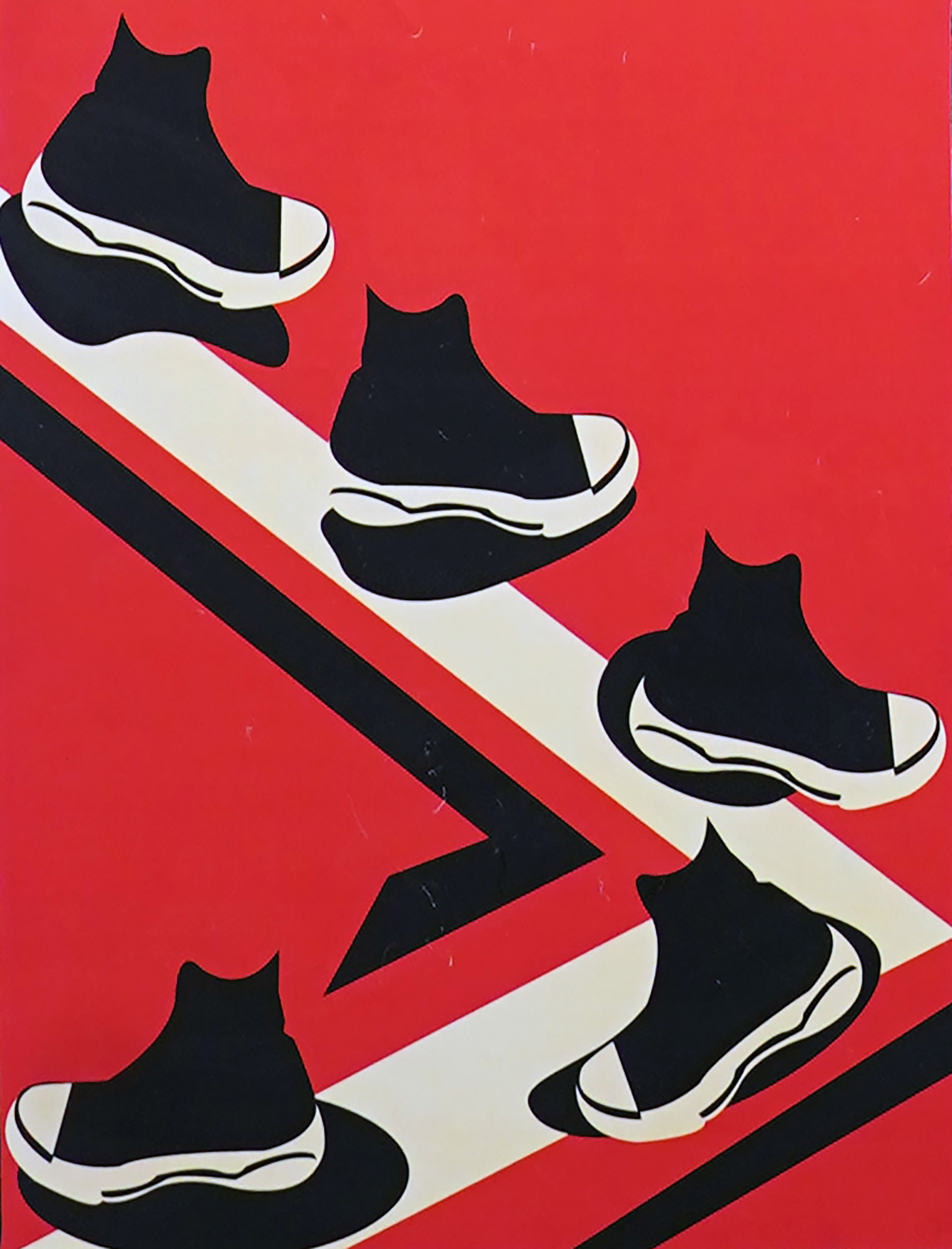
So you’re going to think this is absurd.
I ate a burger today.
Yes, I know—that isn’t very eventful at first glance. But I’m telling you, there was something about that burger that set everything else in motion. Or maybe it wasn’t the burger at all. Maybe it was the moment that came after or perhaps even before.
The burger itself was massive. Seven, maybe eight inches thick. Cheese stacked between layers like partitions separating things that weren’t meant to touch. Mustard and ketchup bled from the sides, and when I took the first bite, it burst outward, splattering across the table like something violent had happened there.
I finished it anyway. That was the first decision. Afterward, I walked to the counter to pay. That was when the problem presented itself. The total was higher than I expected. Higher than I could afford. The cashier stood there, waiting. Not impatient. Not kind either. Just present. I checked my wallet again, though I already knew what I would find. Nothing had changed. And that was when I realized I had options. Not many. But enough.
Option one: admit I couldn’t pay. Accept whatever came with that—embarrassment, police, consequences.
Option two: call someone. Family. Friend. Anyone willing to bridge the gap between where I stood and where I needed to be.
Except, I had no family in this state. No friends nearby. Which left one remaining option. Leave. Just walk out and pretend none of it happened. Risk becoming the kind of person who runs from things. I stood there longer than I should have, pretending to consider alternatives that did not exist. And then—I chose. I walked out. The bell above the door chimed softly as it closed behind me. No one shouted. No one grabbed my arm. No one even noticed. That was almost the worst part.
Outside, the air was colder than I expected. The street was alive in the way cities always are—cars passing, strangers walking past each other without ever seeing one another, the quiet machinery of millions of separate decisions unfolding simultaneously. I began walking. Not quickly. That would have looked suspicious. Just enough to blend into the rhythm of everyone else. I made it half a block before I realized my hands were shaking. That was when the second decision presented itself.
Option one: keep walking. Put distance between myself and the place.
Option two: Go back. Confess. Undo the previous decision.
For a moment, I actually slowed. I imagined walking back through the door. The cashier looking up. The conversation that would follow. The shame. The explanation. The possibility that it might end cleanly. But there was something heavier than shame pulling me forward. Momentum. I kept walking. That was the second decision. A police siren sounded somewhere behind me. Not close. Not yet. But close enough. My chest tightened.
Option one: ignore it. Continue as if it had nothing to do with me.
Option two: run.
Running would confirm guilt—even if no one had been looking. I forced myself to maintain my pace. A man passed me going the opposite direction. He glanced at my face briefly, then away again. I wondered what he saw. If there was something visible in me now that hadn’t been there before. A mark. A shift. Something irreversible. The siren grew louder. Then softer. Then disappeared entirely. I exhaled. That was when I noticed the police car parked ahead at the intersection. Empty. Driver’s side door open. Engine running. The officer stood across the street, speaking to someone I could not see. And suddenly—I had options again.
Option one: cross the street normally. Pass the car. Continue my path.
Option two: turn around. Choose a different street. Avoid proximity entirely.
Option three: stop walking.
Stopping, however, was not really an option. Stopping invites attention. Stopping invites questions. Stopping requires explanation. I continued forward. Each step felt heavier than the last. The police car grew larger in my vision. The open door. The radio crackling faintly. The absence of the officer inside. I could see my reflection briefly in the drivers’s side mirror as I passed. I looked the same. That surprised me. I had expected something visible to change.
A crack. A fracture. Something. But there was nothing. Just a man walking. I passed the car. Nothing happened. No voice called out. No hand grabbed my shoulder. I reached the corner. And then I stopped. Not because I chose to. Because there were no other directions to move. Ahead of me, the street was blocked off. Yellow tape stretched from one lamppost to another. Beyond it, flashing lights painted the pavement red and blue. An accident.
A crowd had gathered. People stood silently, watching something on the ground I could not see. I felt it immediately. The narrowing. The options compressing.
Option one: turn left.
Option two: turn right.
Option three: stay.
I turned left. The street was quieter there. Narrower. The buildings leaned inward slightly, as if listening. My footsteps echoed. I realized then that I was no longer thinking about the burger. I was thinking about the choices that followed it. Each one smaller than the last. Each one determined by the previous. I could not return to the moment before the burger.
That option no longer existed.
A figure appeared ahead of me. Standing still. Facing me. A man. Older. Wearing the same coat I was wearing. My pace slowed. He did not move. As I approached, I began to recognize his face. Not because I’ve seen it before. Because I saw it every morning. In mirrors. He watched me with an expression that wasn’t anger. It wasn’t an accusation. Only certainty.
“You’re wondering when it stopped being a choice,” he said.
His voice was mine. I did not respond. Because I already knew the answer. He stepped aside. Behind him was nothing. No street. No buildings. Only darkness.
“You can still go back,” he said.
I looked behind me. The street I had walked down was gone. There was only forward. Only him. Only this. And suddenly I understood. There had never been an infinite number of options. Only the appearance of them. Each decision narrows the path. Each path eliminates the others. Until only one remained. He studied my face carefully.
“You already know what happens next,” he said.
He wasn’t asking. He was remembering. And that was when I realized—I was not deciding anything anymore. I was arriving. You know that crazy smile just before laughter one gets when they reach the inevitable. Not the smile, nor the laughter of joy but because every emotional response the brain tries to pull comes up as invalid. So the system crashes. That was me, alone as I came to one final conclusion.
Free will is a funny thing, isn’t it? A noose that is tightening and tightening until you realize you never have free will at all—that you were only reacting to try and save yourself from choking, only until it’s too tight for any more reaction.